Showing posts with label January Meeting. Show all posts

February 26 Meeting - "Animal Farm" by George Orwell

Why should we read  it?

It is always a good idea to take a look back at some great classic British novelists. One of the most important characteristics of a master piece is that no matter how long ago it was written, it still has a message or several, to convey to present-day readers and a really meaningful one. I hope you enjoy it as much as I did!!

Source: The following text has been compiled from Wikipedia publications
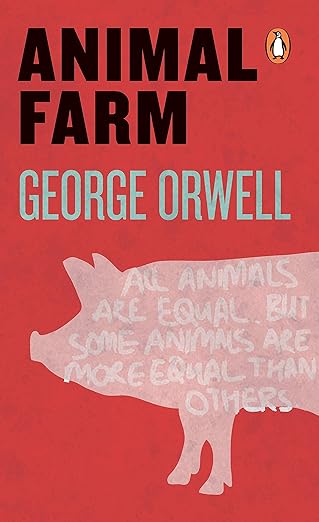
Source: Amazon
Time magazine chose the book as one of the 100 best English-language novels (1923 to 2005); it also featured at number 31 on the Modern Library List of Best 20th-Century Novels,and number 46 on the BBC's The Big Read poll. It won a Retrospective Hugo Award in 1996, and is included in the Great Books of the Western World selection.

Eric Arthur Blair (25 June 1903 – 21 January 1950) was an English novelist, poet, essayist, journalist, and critic who wrote under the pen name of George Orwell. His work is characterised by lucid prose, social criticism, opposition to all totalitarianism (both authoritarian communism and fascism), and support of democratic socialism.

Orwell is best known for his allegorical novella Animal Farm (1945) and the dystopian novel Nineteen Eighty-Four (1949), although his works also encompass literary criticism, poetry, fiction and polemical journalism. His non-fiction works, including The Road to Wigan Pier (1937), documenting his experience of working-class life in industrial Northern England, and Homage to Catalonia (1938), an account of his experiences soldiering for the Republican faction of the Spanish Civil War (1936–1939), are as critically respected as his essays on politics, literature, language and culture.

Orwell's work remains influential in popular culture and in political culture, and the adjective "Orwellian"—describing totalitarian and authoritarian social practices—is part of the English language, like many of his neologisms, such as "Big Brother", "Thought Police", "Room 101", "Newspeak", "memory hole", "doublethink", and "thoughtcrime". In 2008, The Times named Orwell the second-greatest British writer since 1945

Animal farm got it difficult to get published:

Animal Farm (originally Animal Farm: A Fairy Story) is a satirical allegorical dystopian novella, in the form of a beast fable, by George Orwell, first published in England on 17 August 1945. It follows the mistreated anthropomorphic farm animals of Manor Farm as they rebel against their human master, and are hoping to create a society where all animals can be equal, free, and happy away from human vices and interventions. However, the rebellion is hijacked and betrayed, and under the dictatorship of the pigs, the farm ends up in a dystopian state nearly identical to what it was before.

According to Orwell, Animal Farm reflects events leading up to the Russian Revolution of 1917 and then on into the Stalinist era of the Soviet Union, a period when Russia lived under the Marxist–Leninist ideology of Joseph Stalin. Orwell, a democratic socialist, was a critic of Stalin and hostile to Moscow-directed Stalinism, an attitude that was critically shaped by his experiences during the Barcelona May Days conflicts between the POUM and Stalinist forces, during the Spanish Civil War. In a letter to Yvonne Davet (a French writer), Orwell described Animal Farm as a satirical tale against Stalin ("un conte satirique contre Staline"), and in his essay "Why I Write" (1946) wrote: "Animal Farm was the first book in which I tried, with full consciousness of what I was doing, to fuse political purpose and artistic purpose into one whole."

Source: Wikipedia
The original title of the novel was Animal Farm: A Fairy Story. American publishers dropped the subtitle when it was published in 1946, and only one of the translations, during Orwell's lifetime, the Telugu version, kept it. Other title variations include subtitles like "A Satire" and "A Contemporary Satire". Orwell suggested the title Union des républiques socialistes animales for the French translation, which abbreviates to URSA, the Latin word for "bear", a symbol of Russia. It also played on the French name of the Soviet Union, Union des républiques socialistes soviétiques.

Orwell wrote the book between November 1943 and February 1944, when the United Kingdom was in its wartime alliance with the Soviet Union against Nazi Germany and the British intelligentsia held Stalin in high esteem, which Orwell hated. The manuscript was initially rejected by several British and American publishers, including one of Orwell's own, Victor Gollancz, which delayed its publication. It became a great commercial success when it did appear, as international relations and public opinion were transformed as the wartime alliance gave way to the Cold War.

> Google Docs - Animal Farm Full Text.pdf - Google Drive


Questions to spark discussion.

1. If you take a look at the first chapters, do you think Mr Jones is to blame for his behaviour? Point out any issues you find negative about how he run the farm.

2. We are presented with some of the pigs who will have an outstanding role all long the novel: Snowball, Napoleon and Squealer. How would you describe them? Why are they essential in the novella’s plot?

3. Look at the Commandments at the beginning and compare them to those at the end. Comment on them.

4. The sheep say a sentence repeatedly: “Four legs good, two legs bad”. What do you think is its hidden purpose? Is it changed at the end? Why?

5. Boxer is the most noble and hard-working animal in the farm, can you comment on his function along the novel? What about Molly? Why do you think she flees right at the beginning of the Rebellion?

6. Snowball and Napoleon fight about the windmill. What do they represent? What about Squealer? Comment on any other characters you like: Moses, the raven...

7. Napoleon takes some puppies and turns them into his bodyguards, why?

8. Pay attention to Benjamin, the donkey. What part does he play in the story?

9. Do you find any similarities between the techniques used by the pigs and some rulers’ tactics nowadays?

Pay attention to the last lines of the novel. Any final comments?
“Twelve voices were shouting in anger, and they were all alike. No question, now, what had happened to the faces of the pigs. The creatures outside looked from pig to man, and from man to pig, and from pig to man again; but already it was impossible to say which was which.”

10. One final question as the conclusion: Do you think terrible dictators such as Stalin or Hitler share tactics or characteristics which could be regarded as similar?

Jhumpa Lahiri on Writing, Translation, and Crossing Between Cultures

 M. Esther's contribution.

Author, teacher, and translator Jhumpa Lahiri joins Tyler for a conversation on identity, Rhode Island, writing as problem solving, reading across languages, the badness of book covers,  Elena Ferrante, Bengali culture, the magic of Calcutta, Italian authors, Indian classical music, architectural influences, and much more.

January Meeting - Interpreter of Maladies by Jhumpa Lahiri

The book contains several short stories. The story chosen for the January meeting is the story inside the book with the same title: “ Interpreter of maladies.”

The Book

Source: Amazon
Interpreter of Maladies (1999), Jhumpa Lahiri’s debut collection of nine short stories, delves into the lives of Indian and Indian-American characters navigating the complexities of identity, cultural displacement, and human relationships. The stories are set in both India and the United States, often portraying individuals caught between traditional Indian values and the Western world.

The title story, Interpreter of Maladies, follows an Indian tour guide who serves as a translator for a troubled American couple, exploring themes of miscommunication and unfulfilled desires. Other standout stories, such as A Temporary Matter and When Mr. Pirzada Came to Dine, examine loss, estrangement, and the quiet struggles of everyday life.

Lahiri’s prose is celebrated for its elegance and emotional depth, capturing nuanced moments of human vulnerability. Her ability to render the inner lives of her characters with such precision resonated deeply with readers and critics alike.

Interpreter of Maladies received widespread acclaim and won the Pulitzer Prize for Fiction in 2000, catapulting Lahiri to international fame. The collection also received the Hemingway Foundation/PEN Award and the New Yorker’s Best Debut of the Year distinction. Lahiri’s poignant exploration of universal themes has ensured the book’s enduring popularity, marking it as a modern literary classic.

The Author

Source: Wikipedia
Jhumpa Lahiri (born July 11, 1967, in London, England) is an acclaimed author and translator of Indian descent. Raised in Rhode Island, USA, Lahiri’s work explores themes of identity, displacement, and cultural hybridity, often reflecting her Bengali heritage and immigrant experience. She earned degrees in English literature from Barnard College, Boston University, and an MFA from Boston University.

Lahiri's literary debut, Interpreter of Maladies (1999), a collection of short stories, won the Pulitzer Prize for Fiction and established her as a significant voice in contemporary literature. Her first novel, The Namesake (2003), was adapted into a film directed by Mira Nair and received critical acclaim for its portrayal of immigrant struggles and generational conflicts.

Subsequent works, including Unaccustomed Earth (2008) and The Lowland (2013), continued to garner praise and awards. Lahiri later transitioned to writing in Italian, a language she learned as an adult, publishing In Other Words (2015) and Whereabouts (2021). She has also translated Italian works into English, demonstrating her deep commitment to linguistic and cultural exploration.

Currently, Lahiri teaches creative writing and continues to influence global literature through her unique narratives and cross-cultural insights.


External interesting links 

Video Reviews of the book
Click on the image


Videos related to the author

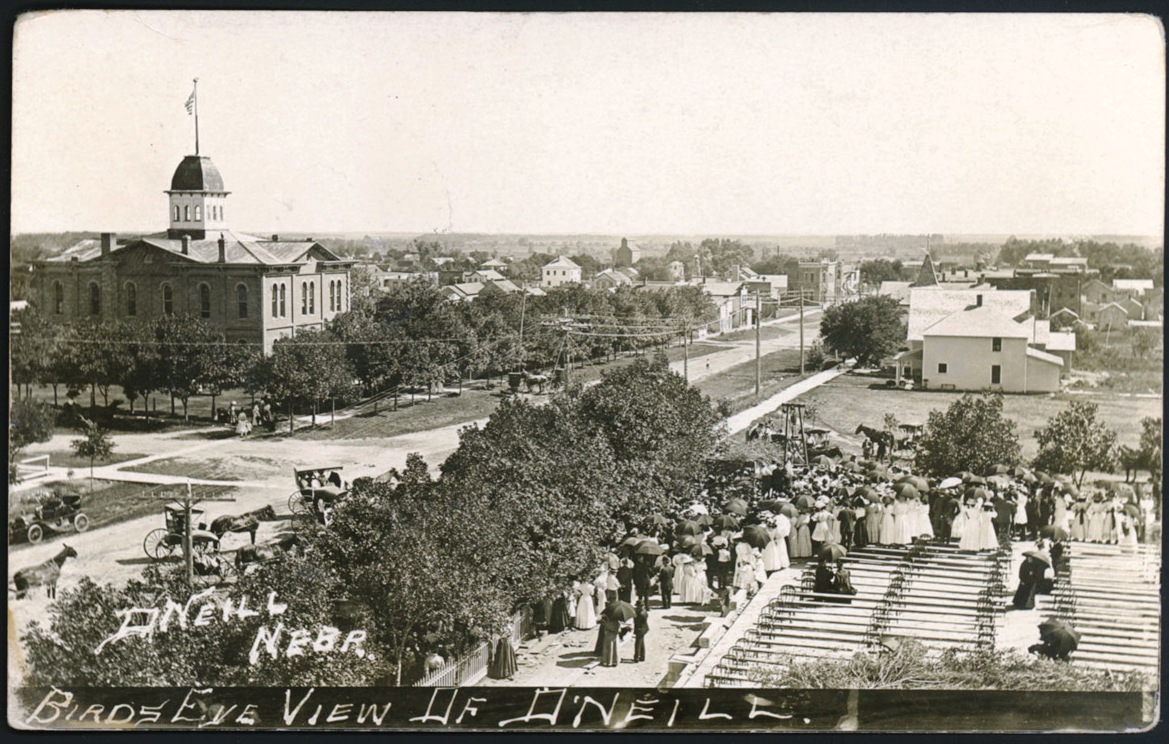
Holt County History and Location, the city where "Our Souls at Night" takes place

 Noelia's contribution

Source: History.Nebraska.gov


Click on the photo to access the Nebraska History website, which explains the history and location of Holt County.


In chapter 34 it is mentioned that the theater session opens and that they are going to do a performance of a book about Holt County.

Songs from the novel "Our Souls at Night"

 Noelia's contribution

These are the songs that are mentioned in chapters 16/17 of the book "Our Souls at Night".


YouTube - Songs - Traditional - Down in the Valley


YouTube - Someone's in the Kitchen with Dinah


January 24 Meeting, "Our Souls at Night" by Kent Haruf


The Book

Source:Amazon

Our Souls at Night" by Kent Haruf is a poignant and tender exploration of love, loneliness, and the human spirit in the twilight years of life. Set in the small town of Holt, Colorado, the novel revolves around Addie Moore and Louis Waters, two elderly neighbors who, in the face of solitude, decide to forge a connection by spending their nights together.


Haruf's writing is spare yet deeply evocative, capturing the quiet beauty of ordinary lives and the complexities of relationships. The narrative unfolds gently, revealing the characters' vulnerabilities, regrets, and unfulfilled desires. As Addie and Louis navigate the judgments of their community and their own personal histories, the novel becomes a meditation on the power of companionship and the capacity for human connection to heal even the deepest wounds.


The author's portrayal of aging is both tender and honest, presenting the challenges and joys of growing old with grace and authenticity. "Our Souls at Night" is a timeless exploration of the human heart, a testament to the enduring need for intimacy and understanding, and a reminder that it's never too late to seek companionship and redefine the meaning of love. Haruf's final novel is a touching masterpiece that lingers in the reader's soul long after the last page is turned.


The Author

Source:Babelio

Kent Haruf (1943-2014) was an American author known for his spare yet powerful novels capturing the essence of life in the American West. Born in Pueblo, Colorado, Haruf drew inspiration from his rural upbringing and experiences to craft stories that resonated with authenticity.


Haruf's notable works include the Plainsong trilogy, but "Our Souls at Night" stands out as a crowning achievement. Published in 2015, it marked his poignant farewell to the literary world. Set in the fictional town of Holt, Colorado, the novel explores late-life companionship between Addie Moore and Louis Waters. The book gained widespread acclaim for its tender portrayal of love and loneliness in the twilight years.


During his career, Haruf received numerous accolades, including the Whiting Foundation Writers' Award and a nomination for the National Book Award. His unique narrative style, characterized by spare prose and deep emotional resonance, endeared him to readers and critics alike.


"Our Souls at Night" holds a special place in Haruf's legacy, representing a culmination of his literary prowess and a touching exploration of human connection in the face of aging. It remains a testament to his ability to distill profound insights from the simplicity of everyday life.


Our Souls At Night | Official Trailer [HD] | Netflix

More information related to the book shared by some of the club members.

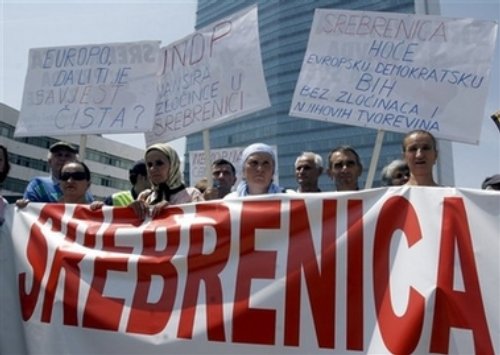
Source: Wordpress - Srebrenicra Massacre


 Maria Esther' contribution

This is a Youtube Video from the Al Jazeera English Channel about the trial and the sentence to Radovan Karadzic who was found guilty of genocide.


This is a review of the book published in Independent. 

Note: This link may not work properly on some computers due to the UK restriction, you'd better use your mobile phone

> Independet - The Little Red Chairs by Edna O'Brien, book review 


Noelia's contribution

This is a report from ICD International Crime Database about the trial of  Mothers of Srebrenica

> International Crime DatabaseMothers of Srebrenica et al v. State of The Netherlands and the United Nations

Radovan Karadzic: the face behind Dr. Val

 Noelia's contribution

The novel follows an imaginary Balkan war criminal, Dr. Vlad, as he interacts with women in an Irish village. The past actions of the main character closely resemble the war crimes of the Bosnian Serb leader Radovan Karadžić. [Wikipedia]

[Wikipedia]

He was arrested in Belgrade on 21 July 2008 and brought before Belgrade's War Crimes Court a few days later. Extradited to the Netherlands, he was placed in the custody of the International Criminal Tribunal for the former Yugoslavia in the United Nations Detention Unit of Scheveningen, where he was charged with 11 counts of war crimes and crimes against humanity.[Wikipedia]

The following BBC podcast is quite curious because it narrates the search process before his capture.

> BBC SoundsThe search for Karadzic and Mladic

On 12 May 2021 it was announced that, with the agreement of the UK authorities, he would serve the rest of his sentence in a UK prison.[Wikipedia]

The following BBC News article describes this fact.

> BBC NewsRadovan Karadzic: Ex-Bosnian Serb leader to be sent to UK prison

The November Man: a film related to the conflict in the Balkans.

Antonio de los Santos' contribution

This film is not a great one, although it is worth seeing because of its complexity mixed genres which shows us how war criminals are not punished in due time, even they can damage human beings. In addition, this film tries to comfort our souls by punishing the vile criminal who had raped an innocent girl to assure us that there is justice after long years of ominous crimes in previously known as Yugoslavia.

source: Wikipedia


The movie is available for rent on Google Play - "The November Man"

January Meeting: The Little Red Chairs by Edna O'Brien

At the next meeting in January, we will talk about Edna O'Brien's novel "The Little Red Chairs", a chilling masterpiece in the opinion of The Guardian. We are sure to enjoy it as in our previous meetings. 
Let's read! 

There is a ton of information from both the book and its author, so some clubmates have already provided a large number of suggestions. We encourage you to share with us any information that you consider important.

Maria Esther's contribution


Edna O'Brien talking about his novel

Edna O'Brien on the Bosnian war and loneliness

Noelia's contribution

I've been reading The Little Red Chairs, concretely, the first chapter, where the author mentions some myths, legends and historical events. I needed to know more about Pooka and the Ballyseedy massacre, and this is what I've found.

source: The Irish Story

source: IrishCentral

source: Belfast Telegraph