
Showing posts with label April Meeting. Show all posts

April 26 Meeting - "Trust" by Hernán Diaz

Last August, our colleague Marta published a fascinating post on this blog sharing her thoughts on the book we're reading this month. If you'd like to delve into all the nuances of this story, click here to read the Marta's contribution post about "Trust" - My Own View .

Sections of this post (click to go)

  1. The Author
  2. The Book
  3. Videos
  4. Discussion Questions
  5. Financial Vocabulary
  6. Mini Financial Timeline: 1929
  7. List of Characters  - Who's Who in "Trust"


1. The Author

Hernán Díaz
was born in Buenos Aires in 1973 and grew up between Argentina and Sweden before settling in the United States. He is a novelist and scholar whose work often explores wealth, power, identity, and narrative form. Díaz earned a PhD from New York University and has taught at several institutions.

His debut novel, In the Distance (2017), was a finalist for the Pulitzer Prize and established him as a bold and innovative literary voice. However, his second novel, Trust, marked a turning point in his career. Published in 2022, the book received widespread critical acclaim and won the 2023 Pulitzer Prize for Fiction.

Trust significantly elevated Díaz’s international reputation. The novel’s ambitious structure and its exploration of capitalism, financial power, and authorship positioned him as one of the most intellectually daring contemporary writers. The success of Trust confirmed his status as a major figure in 21st-century literary fiction.
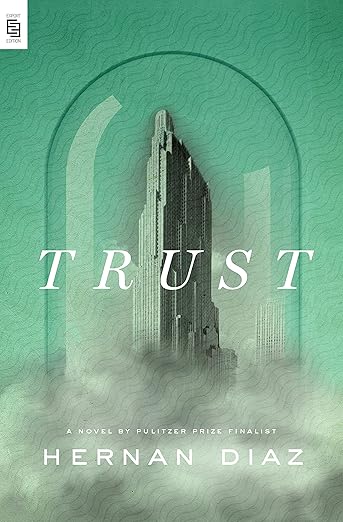
2. The Book

Source: Amazon
In the triumphant 1920s, Benjamin Rask and his wife Helen dominate New York: he, a financial magnate who has amassed a fortune; she, the daughter of eccentric aristocrats. But as the decade draws to a close, and their excesses reveal a dark side, suspicion begins to surround the Rasks…

This is the starting point of “Bonds” (the first part of the book Trust), a bestselling 1937 novel that all of New York seems to have read, and which tells a story that can, however, be told in several other ways.

Trust is divided into four interconnected parts, each offering a different version of the same story and challenging the reader’s understanding of truth and authorship.

The first part, Bonds, is a fictional 1930s novel written by Harold Vanner. It tells the story of Benjamin Rask, a wealthy financier, and his wife Helen, portraying them as distant and tragic figures. That is an external and possibly sensationalist version.

The second part, My Life, is an unfinished autobiography written by Andrew Bevel, a powerful Wall Street magnate who clearly resembles Rask. Bevel seeks to correct what he considers the false portrayal of his life in Vanner’s novel, it is an attempt to control the narrative.

The third part, A Memoir, Remembered, is narrated by Ida Partenza, Bevel’s secretary. She recounts how she was hired to ghostwrite Bevel’s autobiography and gradually uncovers the hidden role of his wife, Mildred. That is a critical outsider's perspective.

The fourth part consists of Mildred Bevel’s private diary, which offers her own fragmented perspective. Together, the four texts reveal how wealth shapes not only history, but also the stories we believe. Mildred's diary is the voice that ultimately reshapes the entire story.

3. Interview and video about the author

YouTube - Service 95 - Hernán Díaz on Writing Trust

YouTube - Service 95 - Dua Lipa In Conversation With Hernan Diaz, Author Of Trust


4. Discussion Questions for Trust (Parts I & II)
by Hernán Díaz

1. Who do we believe?
In Part I (“Bonds”), we read a story about Benjamin and Helen Rask.
In Part II (“My Life”), Andrew Bevel tells his own story.
○ Which version feels more believable to you?
○ Why?

2. Main Differences
○ What are the biggest differences between Benjamin Rask and Andrew Bevel?
○ How are their wives (Helen and Mildred) different in the two texts?
○ Why do you think these differences are important?

3. How is Wealth Shown?
○ How does each part describe rich people and the world of finance?
○ Does Part I criticize rich people more?
○ Does Part II try to defend them?

4. The Wives’ Role 
Compare Helen and Mildred.
○ How intelligent and independent are they in each story?
○ Do they seem strong, controlled, misunderstood, or something else?

5. The 1929 Stock Market Crash
○ How is the crash described in both parts?
○ Is Bevel/Rask responsible in any way?
○ Does each story judge him differently?

6. Writing Style
Part I reads like a traditional novel.
Part II feels like a personal explanation or defense.
○ How does the style change your opinion of the characters?
○ Which style did you prefer?

7. Why Write a Second Version?
○ Why do you think Andrew Bevel wants to tell his own version of the story?
○ What does this say about power and reputation?

8. Loneliness and Power
Both men seem distant and emotionally cold.
○ Why are they like this?
○ Is their personality connected to money and success?

9. What Is the Truth?
○ After reading both parts, do you think we can know the “real” truth?
○ Or does the novel suggest that truth depends on who tells the story?

10. Your Personal Reaction
○ After reading both sections, whose story affected you more?
○ Did your opinion change between Part I and Part II? Why?

Discussion Questions to Use with the Timeline
After reading the timeline, reflect on the following questions:
● How does knowing this timeline change your view of Bevel/Rask?
● Is he a genius investor — or someone who benefits from crisis?
● Does the crash seem like an accident, or something predictable?

5. Financial Vocabulary

Financial Vocabulary from Trust

1. Speculation / Speculative Activity
● Buying shares or assets expecting prices to rise quickly.
● In the novel: Investors in the 1920s (including Rask/Bevel) often take big risks to make fast profits.

2. Stock Market / Trading
● The buying and selling of company shares.
● In the novel: The rise and fall of shares drives the characters’ wealth and anxiety.

3. Market Collapse / Crash
● A sudden, steep fall in stock prices.
● In the novel: The 1929 crash affects everyone’s fortunes and shows the fragility of wealth.

4. Wealth Concentration
● The accumulation of extreme wealth in the hands of very few people.
● In the novel: Bevel’s rise illustrates how few can dominate finance and public perception.

5. Public Perception / Reputation as Currency
● The idea that trust and fame are as valuable as money in maintaining wealth.
● In the novel: Bevel carefully shapes how people see him, almost like managing a financial asset.

6. Financial Risk / Exposure
● The possibility of losing money due to investment decisions.
● In the novel: Risk-taking drives both the success and the near collapse of fortunes.

7. Philanthropy as Social Investment
● Giving money to cultural or educational institutions to secure social influence.
● In the novel: Bevel uses charitable acts to cement his reputation and legitimacy.

8. Economic Downturn / Recession
● A period when the economy slows, businesses fail, and unemployment rises.
● In the novel: The aftermath of the 1929 crash creates wider social and economic consequences.

9. Insider Knowledge / Privileged Information
● Knowing something about markets or investments that most people do not.
● In the novel: Wealthy investors like Bevel benefit from information and influence that ordinary people don’t have.

10. Illusion of Stability
● A false sense that wealth, markets, or power are secure and predictable.
● In the novel: Both narratives show that fortunes can vanish overnight, despite appearances.

6. Mini Financial Timeline: 1929

Before 1929 – The “Roaring Twenties”
● The U.S. economy is growing quickly.
● Many people invest in the stock market.
● Stock prices rise very fast.
● Some people buy shares with borrowed money (this increases risk).
● There is a lot of optimism and speculation.
👉 Connection to the novel: This is the world in which Rask/Bevel becomes extremely wealthy.

Early 1929 – Warning Signs
● Experts begin to worry that stock prices are too high.
● Some investors quietly start selling their shares.
● The market becomes unstable.
👉 Discussion link: Who understands the danger? Who profits from it?

October 24, 1929 – “Black Thursday”
● Many investors panic and try to sell their shares
● Stock prices fall quickly.
● Banks and large investors try to calm the market by buying shares.

October 29, 1929 – “Black Tuesday”
● Panic continues.
● Millions of shares are sold.
● Prices collapse.
● Many investors lose everything.
👉 This is the moment usually called the Stock Market Crash of 1929.

After the Crash (1930s)
● Thousands of banks fail.
● Businesses close.
● Millions of people lose their jobs.
● This period becomes known as the Great Depression.


7. List of characters

1. Correspondences between characters (the “two versions”)

In Bonds (fictional novel)

In the other parts

Role in the story

Benjamin Rask

Andrew Bevel

New York financial magnate whose fortune and reputation are at the center of the story.

Helen Rask

Mildred Bevel

An extremely intelligent and cultured wife; her true role in the fortune is one of the mysteries of the novel.

Leopold  

Helen's Father 


Doctor treating Helen

Mildred's Doctors

They intervene during the wife's illness.

This shows how the first part rewrites real history, changing names and emphasizing certain features.


2. Main Characters for Each Narrator

Bonds - Fictional story inspired by the Bevels.

• Benjamin Rask – mysterious and extremely wealthy financier.

• Helen Rask – brilliant wife whose illness dominates the plot.

• Leopold – Helen's Father.

• Helen's doctors – intervene during her decline.

________________________________________

My Life (Andrew's autobiography)

• Andrew Bevel – attempts to rebuild his public reputation.

• Mildred Bevel – presented as a refined wife and music lover.

• William Bevel – Andrew's father, a key figure in the creation of his wealth.

• Adelaide Bevel – Andrew's mother, associated with high society.

• Harold Vanner – financial partner or ally.

April Meeting - "The Thing Around Your Neck" by Chimamanda Ngozi Adiche

 The Book

Source: Amazon

Chimamanda Ngozi Adichie’s short story The Thing Around Your Neck is a poignant exploration of displacement, cultural clashes, and gender expectations. The story follows Akunna, a young Nigerian woman who immigrates to the United States on a visa sponsored by her uncle. However, instead of the promising new life she envisioned, she finds herself isolated and struggling with loneliness and cultural alienation. The “thing around her neck” metaphorically represents her feelings of suffocation and helplessness in her new environment.

The story is part of Adichie’s acclaimed short story collection of the same name, published in 2009. The collection addresses themes such as immigration, identity, and the complexities of the African diaspora, often highlighting the experiences of Nigerian women navigating unfamiliar and sometimes hostile spaces.

Critics praised The Thing Around Your Neck for its lyrical yet accessible prose, emotional depth, and sharp social commentary. The collection received widespread acclaim, reinforcing Adichie’s status as one of the most important contemporary African writers. It was shortlisted for prestigious awards, including the Commonwealth Writers’ Prize, and was lauded for its nuanced portrayal of the African immigrant experience.

The story resonates with readers globally due to its exploration of universal themes such as belonging, power dynamics, and resilience. It remains an essential work in discussions on post-colonial literature, feminism, and migration, further solidifying Adichie’s literary influence.


The Author
Source: The Dewdrop

Chimamanda Ngozi Adichie is a Nigerian writer known for her powerful storytelling and exploration of themes such as identity, feminism, and post-colonialism. Born on September 15, 1977, in Enugu, Nigeria, she grew up in Nsukka, where her father was a professor and her mother was the first female registrar at the University of Nigeria.

Adichie moved to the United States to study communications and political science at Drexel University before transferring to Eastern Connecticut State University. She later earned a master's degree in creative writing from Johns Hopkins University and a master's in African Studies from Yale University.

Her debut novel, Purple Hibiscus (2003), was critically acclaimed and won the Commonwealth Writers' Prize. This was followed by Half of a Yellow Sun (2006), which focuses on the Nigerian Civil War and won the Orange Prize for Fiction. Her third novel, Americanah (2013), explores race, migration, and identity through the story of a Nigerian woman living in the U.S.

Adichie is also known for her influential TED Talks, particularly We Should All Be Feminists (2012), which was adapted into a book and widely cited in discussions on gender equality. Her works have earned numerous awards, and she is considered one of the most important contemporary African writers.

Through her novels, essays, and speeches, Adichie continues to inspire global conversations on literature, culture, and feminism.

Short interview with the Author

Source : YouTube > Late Night with Seth Meyers

Chimamanda Ngozi Adichie Shares How Her Mom Inspired Her to Write Dream Count


Useful Links about Chimamanda Ngozi Adichie

> General overview of the author: The Guardian - Where to start with: Chimamanda Ngozi Adichie

> How to pronounce <Chimamanda Ngozi Adichie>

> How to pronounce <Lagos>

Cultural references in the Story

> Green Card Lottery

> Wikipedia - Okot p'Bitek

> Wikipedia - Amos Tutuola

> Wikipedia - MSG - Monosodium glutamate

> Long Island Sound 

BBC News _ Nawal el Saadawi

ONUGBU SOUP - Nigerian Bitterleaf Soup

> Wikipedia - Jeopardy!

YouTube - Games | Final Jeopardy! | JEOPARDY!

April Meeting

> Discussion Questions for the April Meeting "The Thing Around Your Neck" by Chimamanda Ngozi


April Meeting, "Let it Snow" by David Sedaris


Note: As we all know, at the next meeting in April we will talk about "Small Things Like These" and this month's essay "Let it Snow".

The Essay

Illustration by Seymour Chwast . The New Yorker

Click "here"  to access the text of the essay

In the wintry landscape of Binghamton, New York, snow was a rarity. David Sedaris, as a young boy, remembered the great heaps of snow from his past, using them as evidence that North Carolina, where he lived, was a subpar place. But when a rare snowfall hit, school was canceled, and the world transformed. For the first time in years, the snow accumulated and froze, creating a winter wonderland.


However, Sedaris’ idyllic snow day took a dark turn. His mother, overwhelmed by their presence during the vacation, evicted him and his sisters from the house. Locked out, they faced the cold, wondering if they might freeze to death. Sedaris even contemplated a drastic solution: one of them getting hit by a car to teach their parents a lesson.


“Let It Snow” captures the blend of childhood innocence, family dynamics, and the unexpected twists that snow days can bring. Sedaris’ storytelling skill paints a vivid picture of that memorable winter day, leaving readers with a mix of amusement and reflection


The Author

Source: Wikipedia

David Raymond Sedaris is an American humorist, comedian, author, and radio contributor. Born on December 26, 1956, in Johnson City, New York, he gained public recognition in 1992 when National Public Radio broadcast his essay “Santaland Diaries.” Sedaris has a distinctive style characterized by self-deprecating humor and keen observations of everyday life.

His debut collection of essays and short stories, “Barrel Fever” (1994), marked the beginning of his literary success. Subsequent works, including “Naked” (1997) and “Me Talk Pretty One Day” (2000), became New York Times Bestsellers. The latter even won the prestigious Thurber Prize for American Humor.

Sedaris often draws from his family life, middle-class upbringing in the suburbs of Raleigh, North Carolina, Greek heritage, homosexuality, jobs, education, drug use, and obsessive behaviors. His writing also reflects his experiences living in France, London, New York, and the South Downs in England. His sister, Amy Sedaris, is an actress and his occasional writing collaborator.

As for the impact of “Let It Snow,” this seemingly innocent story about a week of snow days takes a darker turn. It reveals the complexities of Sedaris’s dysfunctional family, touching on alcoholism, identity issues, and regret. Through humor, he sheds light on the difficulties of parenting while dealing with personal struggles.

In summary, David Sedaris’s unique blend of wit, satire, and vulnerability has solidified his place as an influential humorist. His work continues to resonate with readers, and “Let It Snow” exemplifies his ability to explore both the mundane and profound aspects of life

The murder weapon: Stromatolites - What are they?

 Antonio de los Santos' contribution

Wikipedia: Stromatolites

From Wikipedia, the free enciclopedia

"Stromatolites  (from Ancient Greek στρῶμα (strôma), GEN στρώματος (strṓmatos) 'layer, stratum', and λίθος (líthos) 'rock') are layered sedimentary formations (microbialite) that are created mainly by photosynthetic microorganisms such as cyanobacteria, sulfate-reducing bacteria and proteobacteria. These microorganisms produce adhesive compounds that cement sand and other rocky materials to form mineral "microbial mats". In turn, these mats build up layer by layer, growing gradually over time. A stromatolite may grow to a meter or more. Although they are rare today, fossilized stromatolites provide records of ancient life on Earth."


The real reason you procrastinate: Learn how to stop putting off important tasks ... with a little help from master procrastinator Margaret Atwood

Noelia's contribution 

TED.com

Adam Grant, a renowned Organizational psychologist, organized the following TED conference on procrastination together with the writer Margaret Atwood. He says: "You procrastinate because you're lazy, right? Wrong. The truth is more complex -- and far more interesting. Learn how to stop putting off important tasks ... with a little help from master procrastinator Margaret Atwood."

Adam Grant, Speaker - TED profile

TED conferences. TED.com

> The real reason you procrastinate / TED

April Meeting: Stone Mattress by Margaret Atwood

 
Wikipedia quote

Stone Mattress (The New Yorker, Dec 2011) - Verna has had several husbands, each having died of 'natural causes'. Verna then goes on a cruise to the Arctic and considers the single men among the passengers including several Bobs. But then she sees Bob Goreham who had raped her fifty-odd years ago when she was fourteen. She moved to a home for unwed mothers and the baby was taken away. But Bob does not recognise her and she plans to kill him via a 1.9 billion old stromatolite...

Wikipedia

Book

The New Yorker - Short Story Full Text


Digital profile about the author (external links)

> Wikipedia: Margaret Atwood

> Margaret Atwood's website

Youtube : Margaret Atwood, Stone Mattress (McClelland & Stewart)
