

January 26 Meeting - "Louisa, Please Come Home" by Shirley Jackson
The Author
 |
| image source: Wikipedia |
Author Overview
Shirley Jackson (1916–1965) was an American writer best known for her unsettling, psychologically rich stories that explore the dark edges of everyday life. Although she wrote novels, memoirs, and humorous essays, she is most celebrated for her mastery of the modern Gothic short story—a genre in which ordinary settings gradually reveal disturbing truths.
Early Life & Influences
Jackson was born in San Francisco and grew up on the West Coast before moving to the East Coast for university. She had a complicated relationship with her family, especially her mother, who often criticized her. Many scholars see echoes of this tension in her stories about fractured families, vulnerable daughters, and individuals who feel misunderstood or alienated.
Writing Career
Jackson gained wide attention in 1948 with “The Lottery,” a short story published in The New Yorker that shocked readers with its calm description of sudden brutality in a small town. The enormous reaction solidified her reputation as a writer capable of exposing the darker side of human nature—and of society as a whole.
Over her career, she wrote:
● Short stories that blend realism with psychological horror
● Novels, including The Haunting of Hill House and We Have Always Lived in the Castle, now considered classics
● Essays and memoirs, which reveal a funnier, more domestic side of her personality
This contrast between her chilling fiction and witty personal essays surprised many readers and shows her range as an author.
Themes in Her Work
Jackson’s writing often explores:
● Identity and self-perception
● Family dynamics and social pressure
● The gap between appearance and reality
● The hidden cruelty of everyday life
She had a talent for taking ordinary situations—family life, small towns, social expectations—and revealing the deeper psychological forces underneath.
Style
Her style is typically:
● Calm, controlled, and subtle, even when disturbing things happen
● Character-driven, focusing on mental and emotional states
● Ambiguous, leaving space for interpretation
● Rich in irony, with understated humor or tension
This understated approach makes her stories powerful: she rarely tells readers how to feel, allowing the psychological unease to grow quietly.
Relevance to “Louisa, Please Come Home”
This short story is a good example of Jackson’s interest in:
● How fragile identity can be
● The complexity of family relationships
● How people can fail to see what is directly in front of them
● The emotional cost of independence and escape
It also shows her classic blend of the ordinary and the unsettling, where a simple situation (a girl running away) turns into something deeper and more disturbing.
YouTube Channel- Books 'n' Cats - How Shirley Jackson exposed the horror of home life
The Book
 |
| image: OpenAI |
Louisa, Please Come Home is a haunting short story by Shirley Jackson, first published in 1960. It follows Louisa Tether, a young woman who decides to leave her family on the day before her sister’s wedding. Without drama or explanation, she slips away, moves to another city, and carefully constructs a new identity. For three years she lives quietly and comfortably, certain that she has escaped the pressures and expectations of home. Her life only becomes complicated when she listens to a radio program discussing her disappearance, a moment of curiosity that triggers her eventual return.
The story reaches its unsettling climax when Louisa presents herself to her family—only to discover that no one believes she is who she claims to be. Jackson brilliantly exposes the fragility of identity and the disturbing possibility that the people closest to us may fail to truly “see” us.
Upon publication, the story was highly praised and won the Edgar Allan Poe Award for Best Short Story in 1961. Its impact lay in the way it challenged American notions of family, belonging, and recognition. With this piece, Jackson reaffirmed her mastery in transforming ordinary situations into psychological nightmares, solidifying her reputation as a sharp observer of social unease.
December 25 Meeting - "Ghost Wall" by Sarah Moss
The Book
 |
| Amazon |
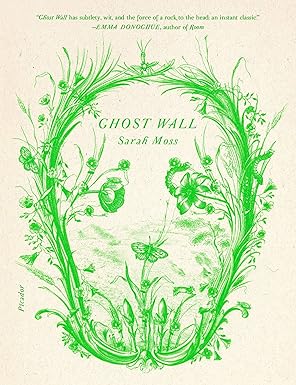
Sarah Moss’s Ghost Wall is a haunting and compact novel that explores the intersection of past and present, power and oppression. The story follows seventeen-year-old Silvie, who joins her father, a history enthusiast obsessed with Iron Age Britain, on an experimental archaeology trip in the North of England. Alongside university students and their professor, the group attempts to live as ancient Britons once did. What begins as a curious exercise in historical recreation slowly turns into something darker as Silvie’s father’s fanaticism and brutality come to light. Moss deftly weaves themes of patriarchy, class, and control into a tense and atmospheric narrative. With its lyrical prose and unsettling emotional depth, Ghost Wall examines how the ghosts of history linger in modern life and how violence—both domestic and cultural—continues to shape identity and belonging.
The Author
 |
| Royal Society of Literature Image credit: Sophie Davidson |
Sarah Moss is a British novelist and academic known for her precise prose, historical awareness, and exploration of everyday anxieties. Born in Glasgow in 1975, she studied English at Oxford University, where she later taught literature and creative writing. Her fiction often blurs the boundaries between the domestic and the political, delving into themes such as family, gender, and societal constraint. Moss’s works include Cold Earth (2009), Night Waking (2011), Bodies of Light (2014), The Tidal Zone (2016), Ghost Wall (2018), and Summerwater (2020). She has received widespread critical acclaim for her ability to combine lyrical storytelling with psychological and social insight. In addition to her novels, Moss has written nonfiction, such as Names for the Sea, recounting her experiences living in Iceland. She currently teaches creative writing and continues to be one of the most distinctive voices in contemporary British fiction.
Supporting documentation for preparing the meeting
External Interesting Video Links
YouTube - History Hit - What Was Life Like in Iron Age Britain?
What are you reading? The Oceans Between Us by Gill Thompson
Noelia's contribution
 |
| Amazon |
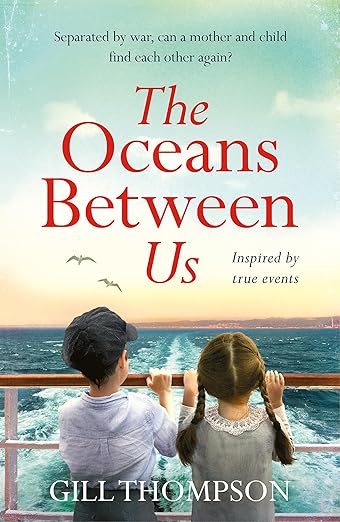
After devouring Swimming in Paris, I was craving a lighter read and stumbled upon The Ocean Between Us by Gill Thompson. I expected something breezy, but the story’s nuanced characters and moving themes of separation and resilience added an unexpected emotional depth that truly surprised me.
The novel revolves around a lost generation of children shipped from England to Australia after World War II. The narrative follows Jack, a young orphan who loses his mother during the Blitz, is placed in an orphanage, and is eventually transported to Australia. Meanwhile, an unknown woman suffering from memory loss wakes up in a hospital, searching for something deeply meaningful to her.
One of the novel’s most powerful themes is the destruction and rupture of family life. Thompson also exposes the heartless government policy of sending orphans abroad to “repopulate” countries like Australia with so-called “pure white blood.” The care of these children was entrusted to religious orders that, instead of nurturing them, subjected them to sexual abuse and forced labor. Finally, the story explores the profound grief that follows loss—and the painful, often incomplete process of acceptance.
 |
| Amazon - About the author |
Gill Thompson draws on real historical events to craft a narrative that leaves a lasting impression. She delves into the complexities of friendship, loyalty, and love in all its forms, while shedding light on the harrowing experiences of English orphaned children abused by the Christian Brothers in Bindoon, Australia. Thompson also condemns the Australian government’s long-standing inaction, which allowed these atrocities to continue unchecked for years.
The Ocean Between Us is a deeply affecting and beautifully written novel that confronts a dark chapter of history with honesty and compassion. It’s a story of loss and injustice, but also of endurance, hope, and the unbreakable strength of the human spirit.
External interesting links
> News.com.au - Royal commission told of torture, rape and beatings by Christian Brothers in WA
> Independent - Bindoon Boys Town: The sad truth behind Britain's lost children
> BBC News - The child abuse scandal of the British children sent abroad
Subscribe to:
Posts (Atom)