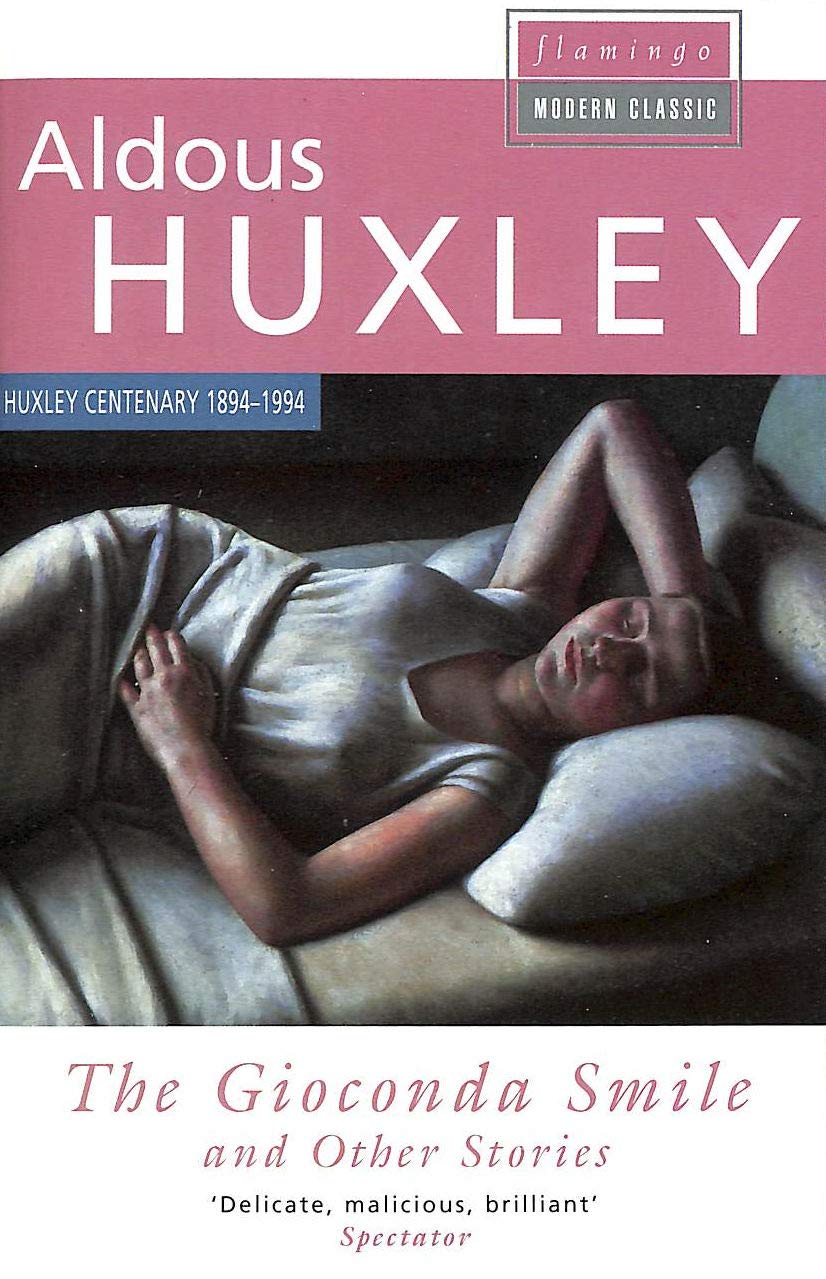
The Gioconda Smile is a short story by Aldous Huxley first published in 1921 and later included in his collection Mortal Coils. The story is a psychological drama centered on Henry Hutton, a cultivated and outwardly respectable man trapped in an unhappy marriage. When his wife dies under suspicious circumstances, his relationship with a devoted admirer seems to promise a new beginning. However, Huxley gradually reveals layers of irony, ambiguity, and moral complexity, leading to an unsettling conclusion.
Rather than focusing on action, the story explores themes of emotional detachment, manipulation, self-deception, and the contrast between social appearances and hidden motives. The title alludes to the enigmatic smile of Leonardo da Vinci’s Mona Lisa, symbolizing ambiguity and concealed intentions.
Although not as famous as Huxley’s later novels, the story was well received and adapted for television, and it remains admired for its sharp psychological insight and subtle, ironic style.
Aldous Huxley (1894–1963) was an English writer, essayist, and intellectual best known for his novel Brave New World (1932). Born into a distinguished family of scientists and scholars, Huxley was educated at Eton and later at Balliol College, Oxford. A serious eye illness in his youth partially impaired his vision, preventing him from pursuing a scientific career, which influenced his turn toward literature.
Huxley became one of the leading literary voices of the 20th century, known for his sharp wit, intellectual depth, and exploration of social, philosophical, and ethical issues. His works range from satirical novels to essays on science, politics, mysticism, and human consciousness. Later in life, he moved to the United States and developed a strong interest in spirituality and Eastern philosophy.
Huxley’s writing continues to be widely read and discussed, particularly for its prescient reflections on technology, society, and human freedom.
Principal Characters
• Mr. Henry Hutton, a wealthy, philandering English landowner
• Mrs. Hutton, his invalid wife
• Doris, his young mistress
• Dr. Libbard, his family physician
• Janet Spence, an unmarried woman in her late thirties who is infatuated with
Hutton
Supporting documentation for preparing the meeting
1. We do encourage you to first read the story as it was written and then go on to watch the magnificent black-and-white movie. It was written in 1921 and adapted into a film in 1948. What differences could you spot? Is it better the story or the movie?
2. The beauty of reading is that it allows you to plunge into a different place, a different time or age. What do you learn about the society in the 1920’s?
3. Do you think Mr Hutton is fed up with his wife’s condition? Can you comment on this character?
4. What do you think of Janet Spence?
5. What role does the family doctor play in the plot?
6. What about Doris? Could she be held responsible for what happened?
7. Comment on the ending. Do you think it served Mr Hutton right?
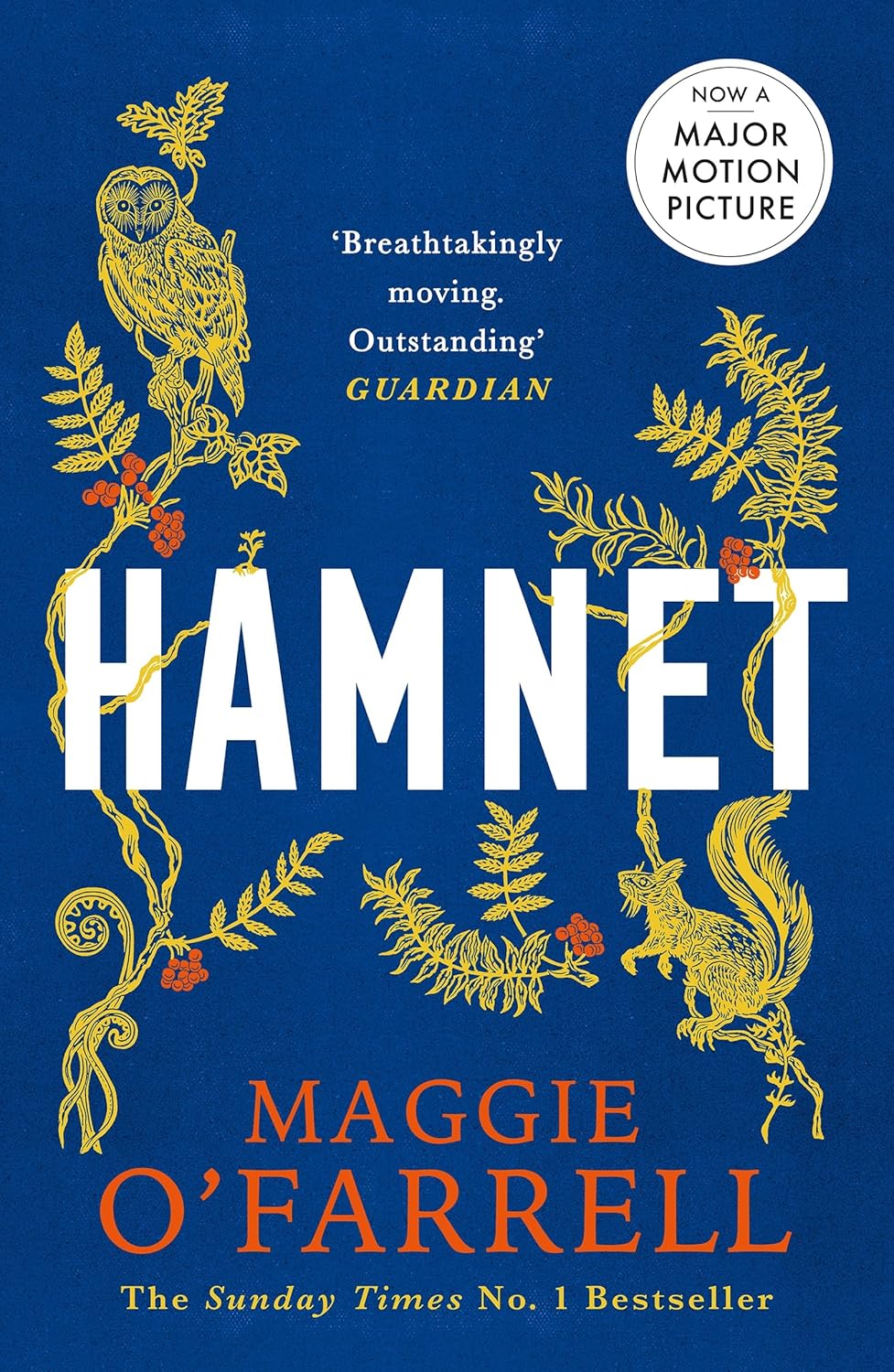
My decision to read Hamnet by Maggie O’Farrell was motivated by the recent release of the film based on the novel. I wanted to form my own opinion and have a personal reading experience, as once a film is made from a book, it becomes the personal interpretation of the director, the screenwriter, and the rest of the creative team. Reading the novel first allowed me to connect directly with the author’s voice and intentions.
Hamnet is a beautifully written and original novel that offers a very human perspective on a well-known literary figure. One of the most striking narrative choices is that Agnes’s husband is never named. This decision feels intentional and meaningful, and it allows readers who may not know who the husband is based on to enjoy the story without feeling lost. The novel does not focus on fame or literary success, but on the personal and emotional life behind the myth.
The story explores universal themes such as love, family, and especially loss. Through these themes, the reader can easily identify with the characters, as their emotions feel real and deeply human. The love within the family and the pain caused by loss are portrayed in a very intimate way, making the novel emotionally powerful and relatable.
Personally, I feel that some chapters are too descriptive. At times, the level of detail slows down the pace of the story and does not add much to my reading experience. Even so, the emotional depth of the novel makes it worth reading.
I would recommend Hamnet to anyone who wants to discover a more human, close, and emotional portrait of the writer and his family, focusing on love, grief, and shared experiences that connect us all.
The Author
BIOGRAPHY generated by OpenAI
Maggie O’Farrell (born 1972) is an Irish-British novelist and memoirist celebrated for her psychologically astute, emotionally resonant fiction. She was born in Coleraine, Northern Ireland, and grew up in Wales and Scotland, experiences that shaped her sense of place and identity and frequently surface in her writing. O’Farrell studied English literature at the University of Cambridge, after which she worked in journalism and publishing before turning to fiction.
Her debut novel, After You’d Gone (2000), won the Betty Trask Award and established her reputation as a distinctive new literary voice. This was followed by a series of critically acclaimed novels, including The Distance Between Us, The Vanishing Act of Esme Lennox, The Hand That First Held Mine, and This Must Be the Place. Many of her works explore memory, trauma, family relationships, and the hidden intersections between past and present, often through non-linear narratives and shifting perspectives.
O’Farrell achieved major international recognition with Hamnet (2020), a novel inspired by the life and death of William Shakespeare’s son. Praised for its poetic language and imaginative re-creation of 16th-century domestic life, the book won the Women’s Prize for Fiction and became a global bestseller. In 2017, she also published the memoir I Am, I Am, I Am, a deeply personal work structured around a series of life-threatening experiences, which further showcased her introspective and fearless approach to storytelling.
Now based in Edinburgh, Maggie O’Farrell is regarded as one of the most important contemporary writers in the English-speaking world, known for blending literary elegance with emotional intensity and for bringing intimate human stories into sharp, unforgettable focus.

.png)