What are you reading? The piano Tuner by Chiang-Sheng Kuo

 Noelia's contribution

The book

I am grateful to everyone who supported me in learning English as a second language. This has enabled me to read novels such as The Piano Tuner by Chiang-Sheng Kuo, a Taiwanese author translated into English, broadening my literary experiences.

The Piano Tuner is a short novel. In the first two chapters, the story centers on Lin San, a businessman married to the pianist Emily. From the third chapter onwards, however, the narrator takes centre stage and becomes the driving voice of the story.

One of the novel’s greatest strengths is its narrative style: simple yet poetic, with music frequently used as a metaphor for life itself. Throughout the book, themes such as loss, grief, and friendship are thoughtfully explored.

One chapter stands out in particular—chapter three. Perhaps because I am a teacher, I found its reflection on the importance of teacher motivation especially powerful, highlighting how educators can empower students and help them fully develop their abilities.

That said, the novel is not without its flaws. Some character arcs feel incomplete, and the ending is abrupt and rushed. Several stories, particularly Emily’s, are left unresolved, and the reader is never given a clear sense of her relationship with the narrator.

As a result, I find myself conflicted about recommending this book. While I deeply appreciated its lyrical narrative and thematic depth, the lack of closure in key storylines ultimately weakens its overall impact.

The Author

Source: Ministry of Culture of Taiwan
Here’s a brief biography of Chiang-Sheng Kuo, the Taiwanese author of The Piano Tuner:

Chiang-Sheng Kuo is one of contemporary Taiwan’s most acclaimed writers, known for his elegant prose and deep explorations of memory, identity, and emotion. He earned a Ph.D. in drama from New York University (NYU) and serves as a professor in the Department of Language and Creative Writing at National Taipei University of Education in Taiwan.

Kuo has published numerous novels, essays, and plays over his long career, establishing a reputation as a “writer’s writer” in Taiwanese literary circles. His work has received many of Taiwan’s major literary honors, including the Taiwan Literature Golden Award, the Golden Tripod Award, the Openbook Book of the Year Award, and the United Daily Literature Award.

His novel The Piano Tuner, first published in 2020, became a bestseller in Taiwan and swept the country’s top literary prizes. It is also his first book to be translated into English and has been published in numerous languages worldwide.

Kuo lives in Taipei, where he continues to write and teach.

What are you reading? The Thirteenth Tale by Diane Setterfield

Noelia's contribution

The Book 

Source: Amazon
While going through my reading list, I came across Diane Setterfield's The Thirteenth Tale.

At the heart of the novel are two unforgettable women: Vida Winter, the legendary and reclusive author, and Margaret Lea, a young and reserved biographer called upon to unravel Vida's mysterious past. As their stories intertwine, Margaret delves into a labyrinth of secrets, family mysteries, and chilling revelations that blur the line between reality and fiction.

The opening chapters are a love letter to the world of books, immersing the reader in Margaret's idyllic life with her father, a bibliophile whose secondhand bookstore is a sanctuary of stories and secrets. Amid the musty scent of yellowed pages and whispered tales, Margaret turns her passion for reading into her profession, becoming a renowned biographer.

Another highlight of the novel is its fervent homage to 19th-century Gothic literature, evoking the sombre worlds of the Brontë sisters. Setterfield masterfully conjures an atmosphere thick with apprehension, where something as simple as a house becomes a character in its own right.

Finally, Setterfield skillfully weaves her narrative threads like an expert puppeteer, building tension with every turn of the page. She conceals the devastating truth like a secret whispered in a dark room until the final sentence, when the kaleidoscope of lives is revealed.


The Author

Source: X
Diane Setterfield is a British author born in 1965 in Englefield Green, Surrey, England. She studied French at the University of Bristol and later completed a PhD in 20th-century French literature. Before becoming a novelist, she worked as a university lecturer.

Setterfield achieved international success with her debut novel, The Thirteenth Tale (2006), a Gothic mystery that became a bestseller worldwide. She is known for her atmospheric storytelling, literary style, and themes of memory, identity, and secrets. Other notable works include Once Upon a River (2018).

January 26 Meeting - "Louisa, Please Come Home" by Shirley Jackson

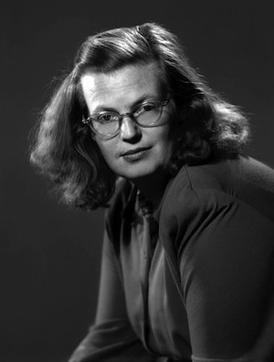
The Author

image source: Wikipedia

Author Overview

Shirley Jackson (1916–1965) was an American writer best known for her unsettling, psychologically rich stories that explore the dark edges of everyday life. Although she wrote novels, memoirs, and humorous essays, she is most celebrated for her mastery of the modern Gothic short story—a genre in which ordinary settings gradually reveal disturbing truths.

Early Life & Influences

Jackson was born in San Francisco and grew up on the West Coast before moving to the East Coast for university. She had a complicated relationship with her family, especially her mother, who often criticized her. Many scholars see echoes of this tension in her stories about fractured families, vulnerable daughters, and individuals who feel misunderstood or alienated.

Writing Career

Jackson gained wide attention in 1948 with “The Lottery,” a short story published in The New Yorker that shocked readers with its calm description of sudden brutality in a small town. The enormous reaction solidified her reputation as a writer capable of exposing the darker side of human nature—and of society as a whole.

Over her career, she wrote:

Short stories that blend realism with psychological horror

Novels, including The Haunting of Hill House and We Have Always Lived in the Castle, now considered classics

Essays and memoirs, which reveal a funnier, more domestic side of her personality

This contrast between her chilling fiction and witty personal essays surprised many readers and shows her range as an author.

Themes in Her Work

Jackson’s writing often explores:

● Identity and self-perception

Family dynamics and social pressure

Alienation and outsiders

● The gap between appearance and reality

● The hidden cruelty of everyday life

She had a talent for taking ordinary situations—family life, small towns, social expectations—and revealing the deeper psychological forces underneath.

Style

Her style is typically:

Calm, controlled, and subtle, even when disturbing things happen

Character-driven, focusing on mental and emotional states

Ambiguous, leaving space for interpretation

Rich in irony, with understated humor or tension

This understated approach makes her stories powerful: she rarely tells readers how to feel, allowing the psychological unease to grow quietly.

Relevance to “Louisa, Please Come Home”

This short story is a good example of Jackson’s interest in:

● How fragile identity can be

● The complexity of family relationships

● How people can fail to see what is directly in front of them

● The emotional cost of independence and escape

It also shows her classic blend of the ordinary and the unsettling, where a simple situation (a girl running away) turns into something deeper and more disturbing.


YouTube  Channel- Books 'n' Cats - How Shirley Jackson exposed the horror of home life

The Book

image: OpenAI

Louisa, Please Come Home is a haunting short story by Shirley Jackson, first published in 1960. It follows Louisa Tether, a young woman who decides to leave her family on the day before her sister’s wedding. Without drama or explanation, she slips away, moves to another city, and carefully constructs a new identity. For three years she lives quietly and comfortably, certain that she has escaped the pressures and expectations of home. Her life only becomes complicated when she listens to a radio program discussing her disappearance, a moment of curiosity that triggers her eventual return.

The story reaches its unsettling climax when Louisa presents herself to her family—only to discover that no one believes she is who she claims to be. Jackson brilliantly exposes the fragility of identity and the disturbing possibility that the people closest to us may fail to truly “see” us.

Upon publication, the story was highly praised and won the Edgar Allan Poe Award for Best Short Story in 1961. Its impact lay in the way it challenged American notions of family, belonging, and recognition. With this piece, Jackson reaffirmed her mastery in transforming ordinary situations into psychological nightmares, solidifying her reputation as a sharp observer of social unease.